

Cyclophosphamide dosages: 50 mg
Cyclophosphamide packs: 30 pills, 60 pills, 90 pills, 120 pills, 180 pills, 270 pills, 360 pills
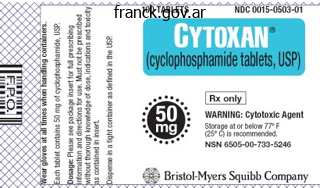
Order 50 mg cyclophosphamide with mastercard
Although the complexities of the guts proceed to humble the 556 scientists and physicians who research it, the heart is exclusive in that, regardless of the complexity of its physiology and the richness of both visceral and romantic imagery associated with it, its perform could be distilled down to that of a simple pump, the operate and dysfunction of which we now perceive an excellent deal about (see Chapter 24). The historical past of improvement of pharmacologic brokers to right abnormalities in coronary heart rhythm is, nevertheless, emblematic of drug development as an entire: major successes combined with paradoxes, damaging unwanted side effects, and the customarily irritating intransigence of what would seem probably the most intuitive targets for antiarrhythmics-ion channels. This launched the theory that blood circulates throughout the body, a hypothesis examined rigorously by Harvey with experiments on animals and the cadavers of executed criminals. Having stated this, blockers, the first antiarrhythmics of the modern era, had been developed in the later Fifties to early Nineteen Sixties not with ion channels in mind, however had been a by-product of Sir James W. Cardiac arrhythmias vary from relatively widespread, persistent arrhythmias such as atrial fibrillation, to the rarer but more acutely dangerous ventricular arrhythmias that may culminate in ventricular fibrillation, which is quickly deadly unless defibrillation is run. Because ion channels and their regulators conduct electrical currents within the coronary heart that decide cardiac rhythm, most anti-arrhythmic drugs act, immediately or not directly, on cardiac ion channels. As various sorts of cells in particular regions of the heart every carry their own signature array of ion channels, antiarrhythmic medicine could be chosen to target the specific regions during which the arrhythmia originates or is most critically manifested. In this article, after a brief historical perspective, we evaluation antiarrhythmic drugs, first discussing them in the context of the broadly used Singh-Vaughan Williams classification system. Next, after a description of the main arrhythmogenic mechanisms, we discuss intimately medical software of the assorted courses of anti-arrhythmics. The chapter is meant to be a guide to the main courses of anti-arrhythmic medication, their usage and mechanisms of motion, and, where appropriate, mechanistic insights into the ion channels that they aim. When the guts develops sustained nonrhythmic beating, typically termed arrhythmia, the consequences can range from mild. Cardiac arrhythmias are handled by surgical ablation, digital pacemaker, cardioversion, pharmacologic agents, or a mixture of those, relying on the situation and nature of the causal issue. For example, in the case of ventricular fibrillation-a life-threatening, chaotic tachycardia-electrical defibrillation is required immediately to forestall sudden cardiac death. This article focuses on antiarrhythmic medications as frequently encountered within the perioperative and critical care settings. These are a broad class of medication, incorporating numerous structural courses and modes of motion, which are used primarily based on the suspected or known molecular etiology of the arrhythmia to be handled. Recent advances in the understanding of the molecular basis for technology of electrical currents within the heart, and also the genetic basis of many cardiac arrhythmias, have contributed to the development and use of antiarrhythmic medication. Furthermore, these advances have demonstrated the basis for the proarrhythmic action of some drugs-paradoxically, even some drugs that are classified and used as antiarrhythmics. To absolutely understand the mechanism of motion of antiarrhythmic drugs, one should perceive each the underlying explanation for the arrhythmia, and the molecular target of the antiarrhythmic; these may or may not be the same entity. Accordingly, this chapter contains not solely a description of the basic and clinical pharmacology of the main courses of cardiac arrhythmias, but additionally a discussion of the mechanistic underpinnings of these arrhythmias. Typically the classification is based on the action that was first described for each drug, which is usually however not necessarily the most therapeutically significant mechanism of motion for each type of arrhythmia for which the drug is prescribed. This discrepancy can occur due to nonspecificity of the drug, or as a outcome of main metabolites of the drug exhibit different exercise than that of the drug itself. The medical pharmacology of the main antiarrhythmic medicine is summarized in Table 27. Sodium Channels and Class I Antiarrhythmic Drugs Voltage-gated Na+ (Nav) channels open in response to cell membrane depolarization to allow influx of Na+, additional depolarizing the cell. These medicine are sometimes referred to as "membrane stabilizing agents" because by blocking cardiac Nav channels, which mediate myocyte depolarization, they reduce mobile excitability. Class I denotes sodium (Na+) channel blocking exercise, with resultant delay in phase zero depolarization and/or altered motion potential length. A, Upper, a generic cardiac motion potential illustrating the phases and major currents concerned. Blockers additionally reduce blood pressure, in all probability arising from a mix of reduced cardiac output, renal renin release, and even perhaps results throughout the central nervous system (see Chapter 26). B, Left, results of sophistication Ia, Ib, and Ic antiarrhythmics (dotted lines) on cardiac myocyte action potentials (purple lines). Right, exemplar class Ia (Quinidine), Ib (Lidocaine), and Ic (Flecainide) antiarrhythmics. This activity will increase action potential period in cardiac myocytes and prolongs the refractory period-that is, it extends the period throughout which the heart is refractory to untimely electrical stimuli. The two most physiologically and therapeutically essential households of K+ channels within the coronary heart, based mostly on present understanding, are the voltage-gated K+ (Kv) channels and inward rectifier potassium (Kir) channels.
Generic 50mg cyclophosphamide with visa
The efficacy of two doses of epidural morphine for postcesarean delivery analgesia: a randomized noninferiority trial. Scheduled acetaminophen with as-needed opioids compared to as-needed acetaminophen plus opioids for post-cesarean pain management. A randomized, double-blinded trial of a "Rule of Threes" algorithm versus continuous infusion of 87. National Partnership for Maternal Safety: consensus bundle on venous thromboembolism. The Society for Obstetric Anesthesia and Perinatology Consensus Statement on the anesthetic administration of pregnant and postpartum girls receiving thromboprophylaxis or larger dose anticoagulants. Patients additionally present for unrelated surgical procedure regardless of the sort of most cancers and regardless of the stage of cancer remedy. Given the prevalence of newly identified cancers each year (approximately 1,700,000 among a total population within the United States of 320,000,000 [0. They due to this fact have a accountability to perceive how cancer therapies would possibly influence anesthetic management. In addition, researchers are exploring how anesthetic management may influence cancer. This article highlights end-organ results of common chemotherapies and evaluations present ideas about anesthetic results on most cancers. Both might show important in determining the finest possible anesthetic plan for the individual affected person with cancer. Chemotherapy Using systemic drugs to poison a cancer cell usually leads to collateral damage. Disrupting cell division additionally impacts normal functioning cells in concerned and uninvolved inner organs, causing both acute and chronic harm after prior and/or cumulative exposures. Understanding the mechanisms by which the totally different chemotherapeutics inflict injury on the target cancer cells helps predict and elucidate what accidents might occur in the the rest of the physique. Agents that have an effect on the exercise of microtubules inside the cell will affect microtubule function not only during mobile division, but also in the performance of other microtubule activities. Finally, agents that kill quickly dividing cells by generating oxygen free radicals additionally injure cells with high metabolic exercise such as cardiac myocytes, leading to cardiomyopathies. The "maximum tolerated dose" has the very best chance of lowering tumor burden and is normally the prescribed 753 he idea of "immunosurveillance" describes a homeostatic steadiness whereby cells that endure transformation into cancer cells are normally eliminated or saved in examine by the immune system. These studies discovered most cancers cells 102 to 103 extra regularly than cancer is manifest clinically. Malignant transformation of cells throughout the body is relatively widespread but clinical instances of cancer not often outcome. Once most cancers is identified in a affected person, treatment may include chemotherapy and radiation therapy geared toward killing the cancer cells, surgery to excise solid tumors, and immune therapy aimed at helping the immune system remove or no much less than modulate most cancers cells. Surgical excision stays the most effective therapy for management of strong tumors (either with or with out adjuvant therapies) and is what most frequently brings sufferers underneath the care of the anesthesiologist. Anesthetists frequently encounter patients in all stages of cancer and cancer therapy. This article highlights the quick term and long term end-organ effects of widespread chemotherapeutics related to the anesthetist and evaluations present concepts about how anesthetics may influence most cancers and most cancers survival. Estimated number of sufferers living with a diagnosis of the particular most cancers as of January 2014 (American Cancer Society, 2016). In relation to surgery, chemotherapy can be administered (1) earlier than surgical excision, as neoadjuvant remedy, to facilitate surgical procedure by reducing tumor burden, killing micrometastases, and probably lowering the survivability of tumor cells liberated during surgical manipulation; (2) after surgical excision, as adjuvant remedy, in an try and eradicate clinically undetectable residual tumor burden; or (3) unrelated to surgical timing, as palliative therapy, to ameliorate patient signs. The second category suppresses proliferation of dividing cells by interfering with microtubule perform. The third class contains targeted therapies, also referred to as precision medication therapies. Targeted therapies are molecules that hinder particular cellular enzymes unique to or overexpressed in malignant cells. Targeted therapies can be molecules made to connect to specific cell membrane antigens to mark the cell and facilitate recognition of the most cancers by the immune system. As an agent of war, mustard fuel was a potent vesicant or blistering agent causing preliminary injury to exposed surfaces, including skin, eyes, and when inhaled, the lungs. Absorption would then result in a drastic discount in cell manufacturing in bone marrow and lymphatic tissue. The alkylating brokers are toxic in all phases of the cell cycle however are most lethal to rapidly proliferating tissues.
Buy 50 mg cyclophosphamide with visa
Myeloablative preparative routine: Chemotherapy regimens with or with out radiation that cause irreversible cytopenias without hematopoietic stem cell help. Myocardial infarction: the formation of an infarct, an space of tissue demise, because of a neighborhood lack of oxygen. Myringotomy: A surgical incision made in the tympanic membrane to relieve strain and drain fluid from the middle ear. Myxedema: Hypothyroidism characterized by a comparatively exhausting edema of subcutaneous tissue, with elevated content material of proteoglycans within the fluid; characterized by somnolence, sluggish mentation, dryness and lack of hair, increased fluid in body cavities such as the pericardial sac, subnormal temperature, hoarseness, muscle weak spot, and gradual return of a muscle to the neutral position after a tendon jerk. Nail psoriasis: Characterized by pitting, onycholysis, hyperkeratosis, and an oil-drop sign. Nonprotein kilocalorie to nitrogen ratio: Numerical worth derived from dividing kilocalories from carbohydrate plus fats by the variety of grams of nitrogen in the food regimen (1 g of nitrogen characterize about 6. Noradrenergic: Neurons or receptors whose major neurotransmitter is norepinephrine. Odynophagia: Pain on swallowing strong food and fluids, which is usually because of esophageal illness. Off-label use: Use of a medicine outdoors the scope of its approved, labeled use. Oiling out: Continued coalescence of lipid emulsion particles, leading to irreversible separation of the emulsion (also called "breaking" or "cracking" of the emulsion). Oligoclonal immunoglobulin G bands: Small discrete bands within the gamma globulin region of fluid electrophoresis. Oliguria: Reduced urine output; usually outlined as lower than four hundred mL in 24 hours or lower than 0. Omentumectomy: Excision of the double fold of peritoneum hooked up to the abdomen and connecting it with belly viscera (omentum). Oncogenes: Genes found in the chromosomes of tumor cells whose activation is related to the preliminary and persevering with conversion of regular cells into most cancers cells. Genes that cause transformation of regular cells into most cancers cells by promoting uncontrolled cell growth and multiplication resulting in tumor formation. Open comedo: A plugged hair follicle of sebum, keratinocytes, and bacteria that protrudes from the surface of the pores and skin and seems black or brown in color. Optic neuritis: Usually monocular central visible acuity loss and ocular/periorbital pain brought on by demyelination of the optic nerve. Orthopnea: Difficulty in breathing that occurs when lying down and is relieved upon changing to an upright place. Nasolacrimal occlusion: the closing of the tear duct to decrease systemic absorption of a drug. Necrotizing enterocolitis: Medical condition seen in premature infants, the place parts of the bowel endure necrosis. Nelson syndrome: A situation characterised by the aggressive progress of a pituitary tumor and hyperpigmentation of the skin. Neoadjuvant therapy: Treatment given earlier than the primary modality to downsize the tumor. Nephrolithiasis: A situation marked by the presence of renal calculi (stones) in the kidney or urinary system. Nephron: the working unit of the kidney that filters blood to take away fluid, toxins, and drugs. Nephrostomy: An synthetic opening created between the kidney and the skin which permits for the urinary diversion directly from the higher a part of the urinary system (renal pelvis). Neuritic plaques: Extracellular deposits of amyloid beta with focus markedly increased within the hippocampus, amygdala, and cerebral cortex. The plaque is believed to be formed via a cascade involving the formation of abnormally folded amyloid beta from amyloid precursor protein. Neurofibrillary tangles: Aggregates of hyperphosphorylated tau protein which can disrupt mobile operate and lead to cellular degeneration and demise. Neuropathic ache: Pain resulting from a lesion or dysfunction of the nervous system. Neuropathy: An irregular and often degenerative state of the nervous system or nerves. Damage to the small and huge nerves as a outcome of glycation finish merchandise, lack of blood and nutrients to the nerves, or chemical imbalances. Neurotransmitters: Chemicals within the brain that allow the passage of a message between neurons or nerve cells.
Cheap cyclophosphamide online american express
Thrombosis: A condition in which blood modifications from a liquid to a solid state and produces a blood clot. Thrombotic thrombocytopenic purpura: Condition characterised by formation of small clots throughout the circulation ensuing within the consumption of platelets and a low platelet rely. Thrombus: Blood clot attached to the vessel wall and consisting of platelets, fibrin, and clotting elements. A thrombus could partially or fully occlude the lumen of a blood vessel compromising blood circulate and oxygen delivery to distal tissue. Thyroglobulin: A thyroid hormone-containing protein, usually saved in the colloid throughout the thyroid follicles. Thyroid peroxidase: Enzyme that catalyzes the organification and coupling steps of thyroid hormone synthesis. Thyrotoxicosis is commonly brought on by hyperthyroidism, a situation during which the thyroid gland produces excessive levels of thyroid hormone. Tonometry: A technique by which the cornea is indented or flattened by an instrument. The strain required to achieve corneal indentation or flattening is a measure of intraocular strain. Tophi: Collections of monosodium urate crystals that develop in tissues and usually seem as agency nodules beneath the skin. Total belly hysterectomy and bilateral salpingooophorectomy: Surgical removing of the uterus, fallopian tubes, and ovaries which leads to instant menopause. Toxic epidermal necrolysis: A life-threatening skin disorder characterized by blistering and peeling of the highest layer of skin. Transcranial magnetic stimulation: A method that includes the use of electrical coils on the top to generate a quick magnetic area which reaches the cerebral cortex. Transesophageal echocardiogram: Procedure (Doppler ultrasound) used to generate a picture of the center by way of sound waves, through a probe introduced into the esophagus (rather than the standard transthoracic view) to get hold of a greater image of the left atrium. Transferrin saturation: the ratio of serum iron and complete ironbinding capacity, multiplied by a hundred. Translocation: Movement of viable micro organism from gastrointestinal tract into other areas of the physique. Transmural: Existing or occurring throughout the whole wall of an organ or blood vessel. Transsphenoidal pituitary microsurgery: Surgery via the nasal cavity to access the pituitary gland by way of the sphenoid bone. Trigeminal neuralgia: A disorder of the fifth cranial (trigeminal) nerve characterised by excruciating paroxysms of ache within the face. Troponin I and T are launched into the blood from the myocytes on the time of myocardial cell necrosis secondary to infarction. These biochemical markers turn into elevated and are used within the analysis of myocardial infarction. Vasomotor symptoms: Menopausal symptoms that embody each sizzling flashes (flushes) and evening sweats for which girls most commonly seek therapy. Vasopressors: Medications that cause constriction of blood vessels, increase in vascular resistance, and enhance in blood strain. Vegetation: Infectious mass comprised of protein, mobile components, and microorganisms hooked up to the endocardial surface of a coronary heart valve which can be visualized on an echocardiogram. Ventricular depolarization: Change within the membrane potential of a ventricular myocyte, resulting in lack of polarization. Under regular circumstances, depolarization of ventricular myocytes is adopted by ventricular contraction. Vesicants: Chemotherapy medicine that trigger important tissue damage if extravasation happens. Virilization: Production or acquisition of virilism, which is masculine traits. Viscoelastic testing: Point-of-care testing units using thromboelastography ideas to evaluate clot formation and dissolution. Vulvovaginal atrophy: Thinning of vaginal tissue as a result of a lack of estrogen stimulation. Wernicke syndrome: Neurologic situation brought on by thiamine deficiency and characterised by psychological confusion, ataxia, and ophthalmoplegia. Wheeze: A high-pitched whistling sound brought on by air moving by way of narrowed airways.
Buy cyclophosphamide 50mg on-line
The neonatal kidney is much less efficient, prolonging the half-life of medication primarily excreted through the kidneys. Neonates even have a decreased proportion of body mass as fat and muscle, which might extend drug results depending on redistribution into these tissues. A study of the pharmacokinetics of etomidate in 49 Ketamine Similar to midazolam, ketamine can be administered as a premedication through several routes (intravenous, transmucosal, oral, or intramuscular; see Table 5. Ketamine can provide sedation and analgesia with minimal respiratory or cardiovascular depression but does have adverse unwanted effects such as dysphoria and excessive salivation. Cardiovascular Function Fixed stroke volume Prone to bradycardia and low cardiac output Body Composition Increased total body water and elevated volume of distribution Renal Function Decreased drug excretion Metabolism At elevated threat for hypoglycemia. As such, ketamine concentrations are a lot greater than norketamine concentrations, and without the first-pass impact, norketamine concentrations peak at 1 to 2 hours. By way of comparability, equianalgesic plasma concentrations for orally administered versus intramuscularly administered ketamine are 40 and 150 ng/mL. These discrepancies are probably a operate of variations in norketamine concentrations. A study of 140 preterm neonates randomly assigned to obtain an intravenous loading dose of morphine one hundred �g/kg or saline answer placebo during endotracheal suctioning revealed only a gentle analgesic profit (as decided by a quantity of validated pain measurement instruments). Because the enzymatic metabolism of remifentanil is essentially mature in kids, some specialists have asserted that remifentanil is nicely suited for use as an intraoperative opioid in youngsters. There is concern that publicity to anesthetics early in life, particularly repeated publicity, may be related to decreased cognitive performance later in life. Major sources of evidence embody in vitro toxicity research, scientific research in animal fashions, and retrospective, hypothesis-generating data-mining studies in people. This effort has gained worldwide consideration and has prompted regulatory businesses to concern practice advisories relating to using frequent anesthetics in pediatric sufferers. Research exploring formation of neuronal networks and synaptic contacts (developmental synaptogenesis) signifies that this course of primarily occurs during the last trimester in utero and the first few years of life, with the first a quantity of months of neonatal life being probably the most intense period because the brain will increase in dimension and neuronal connections. Central nervous system melancholy by anesthetics alters the balance of excitatory and inhibitory synaptic transmission. Although transient, this imbalance can cause apoptosis of developing neurons and glia. The neurodegenerative impact of anesthetics on infants has been confirmed across a quantity of mammalian species, resulting in neurotoxicity and both short- and long-term behavioral modifications. The relationship between the length of synaptogenesis and the length and variety of anesthetic exposures is advanced, but even a single publicity throughout lively synaptogenesis can produce neurodegeneration. In greater mammalian brains, both a single long exposure and a number of shorter exposures impair neurocognitive improvement. Although behavioral research suggest cognitive and emotional deficits in addition to morphologic modifications, causality between the noticed morphologic adjustments and behavioral issues has not been demonstrated. Although this has implications not solely in providing general anesthesia for procedures in pregnant women and kids but also in kids requiring sedation in the intensive care unit, there are limitations to the animal information, together with the difference between anesthetizing healthy animals in contrast to children with comorbidities requiring anesthesia and a focus in the intensive care unit. Furthermore, there are questions concerning the generalizability of daily anesthetic exposures in animals. Several scientific research are investigating the relationship between publicity to anesthesia and neurocognitive deficits. The neurocognitive effects had been evaluated from ages 8 to15 years and no difference was found between the teams. Children who require surgical procedure and anesthesia at a young age may be predisposed to neurodevelopment delays related to the severity of an sickness and/or the surgical procedure and never the anesthetic exposure itself. As such they recommend that patients in their third trimester of being pregnant or younger children proceed with medically essential procedures. However, they advocate giving sturdy consideration to delaying elective procedures in these patient groups until the people in danger are older than 3 years of age. Specifically, studies that explore the utilization of protocols that reduce anesthetic exposure via using short-acting medicine, adjuvants, multimodal pain therapy, and/or local or regional strategies would possibly present necessary insights into optimizing take care of this patient group. Furthermore, comorbidities, similar to preexisting neurologic, hepatic, or renal illness, can improve patient sensitivity to anesthetics.
Thalictroc (Hedge Mustard). Cyclophosphamide.
- Urinary tract diseases, coughs, chronic bronchitis, inflammation of the gallbladder, use as a gargle or mouthwash, and other conditions.
- Are there any interactions with medications?
- What is Hedge Mustard?
- Are there safety concerns?
- Dosing considerations for Hedge Mustard.
- How does Hedge Mustard work?
Source: http://www.rxlist.com/script/main/art.asp?articlekey=96596
Purchase cyclophosphamide 50mg with visa
Probability to tolerate laryngoscopy and noxious stimulation response index as 54. Hypnotic and anesthetic interactions between ketamine and midazolam in feminine patients. Additive interactions between propofol and ketamine when used for anesthesia induction in feminine patients. Synergism between rocuronium and cisatracurium: comparison of the Minto and Greco interaction fashions. Refining target-controlled infusion: an assessment of pharmacodynamic target-controlled infusion of propofol and remifentanil utilizing a response floor mannequin of their combined results on bispectral index. Closed-loop coadministration of propofol and remifentanil guided by bispectral index: a randomized multicenter examine. Another drawback is that it could be tough to distinguish an adverse drug response from what is commonly often known as a "facet impact. One specific side of a aspect impact, which may differ from an antagonistic drug response, is that the impact could be useful. An example in anesthetic follow one hundred thirty is the utilization of lidocaine as an antiarrhythmic. Further confusion with the definition of an antagonistic drug reaction is when a drug is being researched or is under surveillance after its preliminary commercial launch. The European Medicines Agency good scientific follow guidelines state that "In the pre-approval clinical expertise with a new medicinal product or its new usages, significantly because the therapeutic dose(s) will not be established: all noxious and unintended responses to a medicinal product related to any dose ought to be considered antagonistic drug reactions. The apply of anesthesia involves the coadministration of several drugs alongside any medicine a patient could already be taking. The potential for drug interaction is therefore very high and this subject is covered elsewhere on this e-book (see Chapter 6). With regard to anesthetic antagonistic drug reactions, a big evaluation of greater than 11,000 antagonistic drug reactions in additional than 6600 sufferers within the United Kingdom confirmed a mortality of 9% with the biggest proportion (>40% of deaths) associated with inhalation anesthetics and the smallest proportion (8% of deaths) from local anesthetics. Historically, antagonistic drug reactions were classified into two distinct classes; type A and kind B. Type A reactions are extra widespread than kind B reactions and depend for greater than 80% of all reactions. This classification has evolved into one described neatly by Edwards and Aronson4 and a modification is shown in Table 7. This article focuses on the final ideas of the mechanisms of opposed drug reactions that can be utilized to a variety of medicine used in the follow of anesthesia. For ease, the format of the chapter displays the classification as described in Table 7. Drug Administration Errors Adverse drug reactions can happen if the drug is incorrectly administered to a affected person. We now know that not all adverse drug reactions are dose-related and the excellence between dose-related and non-dose-related reactions is commonly used in classification systems. Dose-related opposed drug reactions replicate inter-individual pharmacokinetic and pharmacodynamic variability. The dangers of such reactions occurring with a particular drug depend on the difference between the effective therapeutic dose and the toxic dose, usually described as the therapeutic index or certain safety issue. Although dose-related opposed drug reactions are extra frequent throughout anaesthetic administration than non-dose-related reactions, the latter may be probably the most dangerous, for instance malignant hyperthermia or anaphylaxis. Across all branches hospital apply the greatest incidence of adverse drug reactions (total incidence and fatal outcomes) arises from drug administration errors. In anesthetic follow there have in depth analyses of the causes of drug errors and proposals to mitigate the human components responsible: these embody a number of technological innovations. However, one can now settle for that battlefield casualties are an inappropriate model for postoperative ache because the ache tolerance of these injured in battle is high because of the psychological and neurohumoral response to the state of affairs. None of the currently obtainable antiemetics was developed primarily for perioperative use. Many have been first introduced as therapies for motion sickness, vestibular issues, migraine, or for the remedy of unwanted effects of radiation remedy or cytotoxic chemotherapy. The butyrephenone droperidol was launched into anesthetic apply as a neuroleptic agent in a dose of roughly zero. This efficacy is maintained at doses 10 occasions decrease than those used for the neuroleptic effect. It could be that extra generally used antiemetics corresponding to phenothiazines and antihistamines (see Chapter 34) are also being used in inappropriately high doses in the perioperative setting with doubtlessly avoidable side effects.
Syndromes
- The woman is not aware of warm fluid entering her body (important to some women, not to others).
- Drink at least 6 - 8 glasses of water per day to produce a large amount of urine. This will help the stone pass.
- When did the sunburn occur?
- Ask your surgeon which drugs you should still take on the day of surgery.
- Bone marrow aspiration and biopsy
- Infections that occur in the womb or after birth
- Agitation
Cyclophosphamide 50 mg low cost
Acetylcholine launched from the preganglionic sympathetic nerve terminals binds to nicotinic receptors within the chromaffin cells of the adrenal medulla. The physiologic effects of the catecholamines epinephrine and norepinephrine are mediated by G protein�coupled receptors found in many tissues (Table 35. This causes an increase in intracellular Ca2+ and corresponding enhance in clean muscle contraction. Sympathetic stimulation leads to secretion of catecholamines, which play a chief role in the stress response to perceived or actual physical or psychological harm, including hemorrhage, extreme hypoglycemia, trauma, surgical trauma, and concern. The primary physiologic effects attributed to catecholamine secretion are mental arousal and application, pupillary dilation, diaphoresis, bronchial easy muscle dilation, tachycardia, lowered exercise of gastrointestinal tract, sphincter constriction, and uterine muscle rest. Catecholamines activate catabolism for the expenditure of power so as to present substrate for the stress response. As such, glucose is mobilized from the liver through glycogen breakdown and fats breakdown. Pheochromocytoma Pheochromocytoma represents the most important illness associated with adrenal medullary tissue. As a result, patients with pheochromocytoma present with extreme (sustained or paroxysmal) hypertension, complications, sweating, and palpitations. Most pheochromocytomas are benign and located unilaterally in an adrenal gland, however approximately 10% can be malignant and 10% could be bilateral/ extra-adrenal in origin. Under basic anesthesia, the indicators of undiagnosed pheochromocytoma embrace tachycardia and hypertension. Preoperative evaluation and evaluation ought to think about remedy with -adrenergic blockers and volume alternative. At the time of analysis, patients with pheochromocytoma are normally hypovolemic with a standard to elevated hematocrit. Preoperative -adrenergic blocker therapy with phenoxybenzamine or phentolamine helps correct the hypertension and vasoconstriction in addition to scale back the intravascular quantity deficit. Beta-blocker therapy is often began after initiation of -adrenergic blocker therapy to assist management heart fee and blood strain. Management of pheochromocytoma resection mandates intraarterial blood stress monitoring for quick analysis of speedy modifications in blood stress, which can help in titration of any necessary vasopressor or vasodilator therapy, and frequent laboratory analysis to assess acid�base status, hematocrit, and electrolyte values. Central venous entry could also be helpful to enable infusion of vasoactive substances and huge volumes of fluid and blood merchandise if required. Intraoperative hypertension can be treated with phentolamine, nitroprusside, or nicardipine. Phentolamine blocks -adrenergic receptors, is relatively quick acting, and prevents effects of catecholamines. Nitroprusside is definitely titratable, with speedy onset and offset, however may end up in cyanide accumulation with excessive doses. Potential anesthetic medicine to keep away from embody people who stimulate sympathetic nervous system exercise or block parasympathetic exercise, similar to ketamine, ephedrine, and pancuronium. After the tumor is resected, hypotension can complicate the intraoperative and postoperative course owing to a decrease in circulating catecholamines and residual antihypertensive therapies. However, in some sufferers, hypertension continues to be problematic and requires remedy. Persistent hypertension is treated with antihypertensive medications in addition to serial surveillance for recurrence of the pheochromocytoma. Most of the mass of the pancreas is made up of exocrine cells, which secrete an alkaline digestive fluid into the pancreatic duct and duodenum. Comprising 1% to 2% of the mass of the pancreas, within the pancreatic lobules, are small clusters of endocrine cells-the islets of Langerhans-which include, and cells. Of endocrine cells, 18% to 20% are cells, which secrete glucagon, and the remaining 5% are cells, which secrete somatostatin. The arterial blood provide to the pancreas consists of branches from the splenic artery and the superior and inferior pancreaticoduodenal arteries. The islets receive 10% to 15% of the pancreatic blood flow; thus, their rich vascularization permits quick access for the hormones to be secreted by the islet cells into the bloodstream. Venous drainage leads directly to the portal vein of the liver; due to this fact, the pancreatic hormones bear first-pass metabolism in the liver earlier than being released into the systemic circulation. Insulin synthesis begins with an inactive protein, pre-proinsulin, which undergoes cleavage to proinsulin after which to insulin by cleavage of the C-peptide linkage construction. The insulin and C peptide make up secretory granules which would possibly be stored in cells and released in response to elevated blood glucose.
Order generic cyclophosphamide pills
It first binds the N-terminal lobe of cardiac troponin C (TnC), thereby stabilizing the Ca2+-bound type of the protein. This prolongs the systolic interaction between actin and myosin and will increase the drive of contraction. Because binding of levosimendan to TnC is dependent on the cytosolic Ca2+ concentration, it happens almost solely during systole, leaving diastolic perform relatively unaffected. Importantly, in contrast to different medication mentioned in this chapter, the increased inotropy is achieved without a rise in myocardial oxygen demand. Ephedrine and milrinone largely resist metabolism and are excreted in the urine, whereas vasopressin is metabolized by particular vasopressinases within the liver and kidney. This leads to medical effects for as much as per week after discontinuation of an infusion. Adrenergic receptors have traditionally been divided into and, and have been subdivided into 1, 2, 1, 2, and 3. Further subtyping has been performed, and a number of other genetic variations have been described (see "Pharmacogenetics"). The predominant location of 1 receptors is on peripheral vasculature; stimulation leads to vasoconstriction of the pores and skin, muscle tissue, and renal and mesenteric vasculature. Stimulation in peripheral vasculature ends in dilation of muscular, splanchnic, and renal vessels. Bronchial clean muscle has a excessive concentration of 2 receptors, the activation of which causes bronchodilation. Additional results include stimulation of glycogenolysis within the liver and a slowing of peristalsis. The three receptor has been identified for years to exist in adipose tissue, the place its stimulation ends in lipolysis. Its existence within the heart has been extra lately recognized, and its role in regular physiology and disease, as nicely as the pharmacologic implications, is still being investigated. Current considering suggests that 3-receptor agonism in the coronary heart causes a lower in inotropy. This adverse pharmacokinetic drug interaction can have necessary implications in the perioperative and intensive care settings. Metabolism/Pharmacokinetics Vasopressors and inotropes generally have brief half-lives and are quickly metabolized, are administered by continuous infusion, and are titrated to scientific effect. In general, these medication exert their effects with an ongoing infusion; the effects quickly lower as quickly as the infusion is terminated. Approximately 25% of dopamine is transformed to norepinephrine in adrenergic nerve terminals; these nerve terminals additionally take up Pharmacogenetics Although fundamental information of the - and -adrenergic receptors forms the foundation for understanding the pharmacology of inotropes and vasopressors, current analysis has unveiled considerable genetic complexity within the receptors. Increasing levels of stimulation of adrenergic receptors are represented by +, ++, +++. There seems to be an association between a few of these genotypes and the event of hypertension and heart failure. Little work has targeted on the results of vasopressors and inotropes in these totally different genotypes. It is cheap to expect, nevertheless, that clinically important differences seen within the response to receptor antagonists. Indeed, a polymorphism within the 1 receptor impacts the response to dobutamine, with a considerably greater heart fee and inotropic response. Individual Drugs Epinephrine Epinephrine is a naturally occurring sympathomimetic with nonselective adrenergic agonist exercise. It is synthesized, saved, and released by the chromaffin cells of the adrenal medulla in response to physiologic stress. It binds to , 1 (the predominant receptor within the heart), and 2 (the predominant receptor in the lungs and vasculature) receptors. Its -receptor�mediated results cause bronchodilation and stabilization of mast cells. The latter decreases the discharge of histamine, tryptase, and different inflammatory mediators that perpetuate the pathophysiology of anaphylaxis. The worth and safety of its -receptor� mediated effects during cardiac arrest are controversial as a outcome of they enhance myocardial oxygen consumption. Epinephrine is used to deal with bronchial asthma (2-mediated bronchodilation), extreme hypotension associated with bradycardia (1-mediated chronotropy) and/or low cardiac output (1-mediated inotropy), and to extend the effects of local anesthetics (-mediated vasoconstriction). Mast cell stabilization and bronchodilation through stimulation of 2 receptors are the two most essential nonhemodynamic, therapeutic results of epinephrine.
Generic cyclophosphamide 50mg visa
Carbetocin is an analog of oxytocin, nonetheless beneath investigation, that has an extended length of motion than oxytocin. Atosiban is a peptide agent that antagonizes the actions of oxytocin for the therapy of preterm labor. Secretion is excessive in childhood, maximal across the time of puberty, and reduces with age. The hormone stimulates the longitudinal development of bones, increases bone density when the epiphyses have closed, stimulates chondrocyte formation, and increases muscle mass. Other Agents Terlipressin is a vasopressin analog, not currently out there in the United States, with an extended length of motion than vasopressin. It is used to treat hyponatremia and has been used efficiently to deal with hyponatremia in liver transplant candidates. They can also theoretically cause speedy hypernatremia and renal failure owing to depletion of intravascular water. They have related biologic exercise however differ barely in their methodology of preparation. This is a rare complication but warrants periodic ophthalmoscopy to assess for the presence of papilledema. There might be an increased risk of cancers including leukemia, although the link is tenuous. Scoliosis and epiphyseal accidents have been related to excessively fast progress. In adults, arthralgias, myalgias, carpal tunnel syndrome, and peripheral edema can occur. Bromocriptine was used for suppression of lactation and reduce of breast dimension when breast feeding was not desired, however that is not beneficial due to the potential for coronary thrombosis and stroke. Pramipexole is a dopamine agonist used in the treatment of Parkinson illness and restless legs syndrome. The former preparation is run intramuscularly, the latter subcutaneously. It is typically used to trigger ultimate maturation of follicles and timed ovulation in assisted reproduction techniques. Adverse effects of gonadotropin therapy embrace melancholy and emotional lability, headache, edema, and antibody production. Gynecomastia may be related to gonadotropin treatment in men and is related to the extent of treatment-associated testosterone manufacturing. Subcutaneous administration can cause hypoglycemia and so must be given only round food ingestion. Drugs Affecting Prolactin Physiology Dopamine acts as an inhibitory transmitter for prolactin launch. The launch of prolactin from prolactin-secreting adenomas can additionally be inhibited by dopamine and dopamine receptor agonists. Bromocriptine and cabergoline are ergot derivatives that act as dopaminereceptor agonists. Longer-acting preparations of bromocriptine are available outside the United States. Side results of dopamine agonists embrace headache, nausea and vomiting, postural hypotension, digital vasospasm, nasal congestion, nightmares, and insomnia. At high doses, pulmonary infiltrates and cardiac valvulopathies Androgens embody testosterone, dihydrotestosterone, and associated compounds. Hepatic metabolism limits the systemic availability of orally administered drug, so parenteral preparations are generally used. A variety of compounds that activate the androgen receptor are additionally used in medical practice. Therapeutic uses embrace catabolic and wasting states and, controversially, enhancement of athletic efficiency.
Real Experiences: Customer Reviews on Cyclophosphamide
Jaroll, 62 years: Apart from the truth that this can be very difficult to distinguish based mostly on historical past and physical examination, when hyponatremia is seriously symptomatic the issue have to be addressed expeditiously. When using metoclopramide (see Chapter 32), one should additionally think about the potential for extrapyramidal unwanted effects, particularly in sufferers with altered psychological standing from traumatic head harm or cerebral vascular occasions. This can lead to spatial and/or temporal facilitation depending on timing and origin of the stimuli. Both drugs, however especially methimazole, can produce agranulocytosis, which appears to be dose associated and might develop rapidly.
Fabio, 56 years: Comparison of chest compression interruption occasions across 2 automated gadgets: a randomized, crossover simulation research. Plasma concentrations are the best after intercostal nerve block and decrease as follows: intercostal > caudal > epidural > brachial plexus > sciatic/femoral. Chemical and irritant receptors are discovered in the nasopharynx, larynx, and trachea. The transducer converts bodily displacement of the transducer membrane into an electrical signal, which is transmitted to the monitor, amplified, and displayed as an analog waveform.
Mufassa, 34 years: The liver oxidizes midazolam to 1-hydroxymethylmidazolam, an active central nervous system depressant metabolite that can accumulate in patients with hepatic or renal dysfunction. An immune-mediated response directed towards hepatocytes leads to fulminant hepatitis with high mortality. Because of the scarcity of aminohydrolase in the pores and skin, approximately 20% of patients receiving bleomycin therapy develop painless flagellate hyperpigmentation of their skin. These triglycerides are launched as chylomicrons and journey via the thoracic lymph duct to be launched into the bloodstream.
Marus, 37 years: White rami connect presynaptic sympathetic fibers (whose cell our bodies are in the lateral horn of the spinal cord) from the anterior rami to the sympathetic ganglia. Trigeminal neuralgia: A disorder of the fifth cranial (trigeminal) nerve characterised by excruciating paroxysms of ache within the face. This increases the opening time of the related chloride channel, which finally ends up in hyperpolarization or stabilization of the resting membrane potential near the chloride equilibrium potential. H2O retention Legend Secretion from an organ + Stimulatory sign � Inhibitory sign Reaction Active transport Passive transport Water and salt retention.
9 of 10 - Review by M. Orknarok
Votes: 291 votes
Total customer reviews: 291
References
- Skinner, H. A. (1982). The drug abuse screening test. Addictive Behaviors, 7, 363n371.
- Brandt T, Hausser I, Orberk E, et al. Ultrastructional connective tissue abnormalities in patients with spontaneous cervicocerebral artery dissections. Ann Neurol 1998;44:281.
- Berg WA, Gutierrrez L, NessAiver MS, et al. Diagnostic accuracy of mammography, clinical examination, US, and MR imaging in preoperative assessment of breast cancer. Radiology. 2004; 233:830-849.
- Raoult H, Gauvrit JY, Schmitt P, et al. Non-ECG-gated unenhanced MRA of the carotids: Optimization and clinical feasibility. Eur Radiol 2013;23:3020-8.
- Tomlinson I, Webb E, Carvajal-Carmona L, et al. A genome-wide association scan of tag SNPs identifies a susceptibility variant for colorectal cancer at 8q24.
- Wall MJ Jr, Hirshberg A, Mattox KL. Pulmonary tractotomy with selective vascular ligation for penetrating injuries to the lung. Am J Surg. 1994;168(6):665-669.
- Washington MK, Tang LH, Berlin J, et al. Protocol for the examination of specimens from patients with neuroendocrine tumors (carcinoid tumors) of the stomach. Arch Pathol Lab Med. 2010;134:187-191.
- Worrillow LJ, Smith AG, Scott K, et al. Polymorphic MLH1 and risk of cancer after methylating chemotherapy for Hodgkin lymphoma. J Med Genet 2008;45(3):142-146.