

Kaletra dosages: 250 mg
Kaletra packs: 60 pills, 120 pills, 180 pills, 240 pills, 300 pills, 360 pills
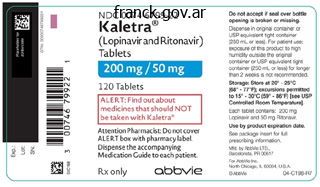
Cheap 250 mg kaletra fast delivery
Infants with cardiac and noncardiac anomalies might require surgical procedure shortly after start. Neonatal surgery is also related to opposed neurodevelopmental outcome, including both the process itself and the anesthesia. Hyperoxemia has been more and more linked with adverse long-term outcomes, especially within the extremely preterm neonate. Spontaneously breathing preterm infants are sometimes treated with additional oxygen supplementation to accelerate normalization of partial arterial oxygen pressure and SaO2. In addition, hyperoxemia usually happens in preterm or term neonates receiving prolonged oxygen therapy for severe respiratory distress syndrome, persistent pulmonary hypertension of the new child, pneumothorax, or extreme bronchopulmonary dysplasia. Hyperoxia still occurs regularly regardless of the elevated consciousness that oxygen remedy for some of these circumstances is out of date and harmful and that uncontrolled oxygen administration in itself is harmful beneath any circumstances except the SaO2 is successfully maintained in a gestational and postnatal age-appropriate vary. Furthermore, even if oxygen saturation is fastidiously monitored, oxygen supplementation throughout episodes of apnea of prematurity can nonetheless end in hyperoxemia. In such instances, concomitant monitoring of cerebral oxygenation may, at least partly, be helpful to reduce the incidence of doubtless dangerous hyperoxic episodes. Episodes of hypercapnia trigger an increase in mind perfusion and thus can contribute to cerebral hyperoxemia, particularly in infants ventilated with additional oxygen supplementation. Our group has reported that abnormally high values of rScO2 (>85% to 90%) in these infants in the course of the first 24 postnatal hours are strongly and independently related to an opposed neurodevelopmental end result at 2 years of age. Its noninvasive and bedside nature and the potential of monitoring the brain repeatedly and instantly are among its attractive features. Finally, the information offered by means of this expertise has improved our understanding of the restrictions of our information and led to the initiation of appropriately designed observational and interventional trials so that the interventions utilized in clinical practice could be critically tested. Relation to the development of intraventricular hemorrhage, N Engl J Med 309(4):204�209, 1983. Petrova A, Mehta R: Near-infrared spectroscopy within the detection of regional tissue oxygenation throughout hypoxic events in preterm infants undergoing crucial care, Pediatr Crit Care Med 7(5):449�454, 2006. Noori S, Seri I: Evidence-based versus pathophysiology-based method to analysis and therapy of neonatal cardiovascular compromise, Semin Fetal Neonatal Med 20(4):238�245, 2015. Banerjee J, Aladangady N: Biomarkers to decide red blood cell transfusion in newborn infants, Transfusion 54(10):2574�2582, 2014. Durandy Y, Rubatti M, Couturier R: Near infrared spectroscopy throughout pediatric cardiac surgical procedure: errors and pitfalls, Perfusion 26(5):441�446, 2011. Cohen E, Baerts W, van Bel F: Brain-sparing in intrauterine development restriction: considerations for the neonatologist, Neonatology 108(4):269�276, 2015. Dyson 19 � the microvasculature is the most important single component of the cardiovascular system. The cardiorespiratory system is crucial within the perinatal adaptation of the human n eonatetoextrauterinelife. The cardiovascular system, as detailed in different chapters of this book, has numerous essential components that have an result on the general efficiency of the system, including the pump, circulating volume, and peripheral vasculature (see Chapters 1, 2, 3, and 21). Specifically,themicrovasculature,asopposedtothemacrovascular conductance vessels, is crucially essential in the delivery of oxygen and nutrients tothetissuesoftheentirebody. Currentaccepteddefinitionsof microvascular elements include, from proximal to distal, arterioles, capillaries, arteriolar-venular shunts, and venules. As almost all tissue must be in close approximation to a blood provide for oxygen and nutrient delivery and removing of waste products, the microvasculature is all-pervasive. Further extra, no much less than 5% of circulating blood volume is in the capillaries at any time, with the capillary system having the ability to improve this capacity by more than fourfold. However, since the new child is quickly rising and has a much less organized capillary network,4 its capillary system might possess even greater proportional capability. This contains the function of oxygenation levels in vascular development, the significance of angiogenic and vascular "pruning" elements in the growing tree. Thus understanding the biology and physiology in the microvasculature contributes to understanding cardiovascular compromise at different gestational and postnatal ages and the position the microvasculature plays in certain long-term penalties of prematurity. The drive to examine and understand microcirculatory status has led to the event and use of a quantity of strategies for the evaluation of the microcirculation in preterm or sick time period newborns. This article critiques the websites and methods which were used, outlines present understanding, and addresses the connection of these microvascular findings to the macrocirculation within the preterm and sick term neonate.
Purchase kaletra with american express
In distinction to being awake, sleeping people are not consciously aware of the external world, however they do have inward conscious experiences, similar to desires. Sleep is characterized by a decreased response to exterior stimuli, decreased voluntary motion, increased rate of anabolism, and a decreased rate of catabolism. During certain stages of sleep, oxygen uptake by the brain is even increased above normal waking levels. At the onset of sleep, you progress via the levels of slow-wave sleep from gentle sleep (stage 1) to deep sleep (stage 4) throughout about a 30- to 45-minute interval; you then reverse by way of the same phases in the same amount of time. A 10- to 15-minute episode of paradoxical sleep punctuates the end of each slow-wave sleep cycle. A particular person cyclically alternates between the two kinds of sleep all through the night time. In a standard sleep cycle, you always pass by way of slow-wave sleep earlier than entering paradoxical sleep. On common, paradoxical sleep occupies 20 percent of whole sleeping time all through adolescence and most of maturity. In contrast, paradoxical in addition to deep, stage 4, slow-wave sleep declines in the elderly. People who require less complete sleeping time than regular spend proportionately more time in the lighter levels of slow-wave sleep. It is troublesome to pinpoint precisely when a person drifts from drowsiness into slow-wave sleep. In this sort of sleep, the individual nonetheless has appreciable muscle tone and regularly shifts Awake-Eyes Open body place. During this time the sleeper may be easily woke up and Awake-Eyes Closed rarely goals. The main exception is nightmares, which happen during phases Stage 2-Slow Wave 3 and 4. The behavioural pattern accompanying paraStages 3 & 4-Slow Wave doxical sleep is marked by abrupt inhibition of muscle tone throughout the body. The eye movements are driven in a locked, oscillating sample, uninfluenced by dream content material. As a outcome, dreams are sometimes charged with intense emotions, a distorted sense of time, and bizarre content material, which, on the time of dreaming, is uncritically accepted as real and includes little reflection about all the unusual happenings. Discuss the location and functions of the three neural techniques that play a job within the sleep�wake cycle. With its swift electrical signalling system, the nervous system is particularly important in controlling the fast responses of the physique. Many neurally managed muscular and glandular activities are aimed toward maintaining homeostasis. It links the suitable response to a particular input so that situations compatible with life are maintained in the body. In addition to serving as a extra complex integrating link between afferent enter and efferent output, the mind is liable for the initiation of all voluntary motion, complicated perceptual consciousness of the external environment and self, language, and summary neural phenomena, such as considering, studying, remembering, consciousness, emotions, and persona traits. All neural activity- from the most personal thoughts to commands for motor activity, from having fun with a live performance to retrieving reminiscences from the distant past-is ultimately attributable to propagation of action potentials alongside particular person nerve cells and chemical transmission between cells. During evolutionary growth, the nervous system has turn out to be progressively more complex. Newer, more sophisticated, and extra sophisticated layers of the mind have been piled on prime of older, more primitive areas. Mechanisms for governing many basic actions necessary for survival are built into the older components of the brain. The newer, greater levels progressively modify, improve, or nullify actions coordinated by decrease ranges in a hierarchy of command, they usually also add new capabilities. In emergencies when oxygen provides are low, the brain can carry out anaerobic metabolism. The hands and constructions related to the mouth have a disproportionately massive share of illustration in both the sensory cortex and the motor cortex. The left cerebral hemisphere specializes in artistic and musical capability, whereas the proper aspect excels in verbal and analytical abilities. The particular perform a particular cortical area will carry out is completely determined throughout embryonic growth. The means of transferring and fixing short-term reminiscence traces into long-term reminiscence stores is named.
Cheap 250mg kaletra amex
Microcirculatory shock is the situation during which the microcirculation fails to support tissue oxygenation in the face of regular systemic hemodynamics. The fetal channels may not close, leading to blood both bypassing the lungs or recirculating via them, relying on the strain differentials in the pulmonary and systemic circulation. I will then recommend a logical approach to utilizing these interventions based mostly on hemodynamic eventualities which might be commonly discovered within the new child in scientific conditions of excessive circulatory risk. Circulatory Support Interventions In a current European-based survey of neonatal circulatory support,2 the commonest first-line interventions were quantity growth (85%), dopamine (62%), dobutamine (18%), each dopamine and dobutamine (18%), epinephrine (2%), and norepinephrine (1%). The identical interventions were used with various frequency as second-line interventions; nevertheless, steroids (10%) and milrinone (1%) had been also used as second-line interventions. This shall be lifesaving in a truly hypovolemic child; in a normovolemic toddler, nevertheless, there could be a direct improve in cardiac output, the maintenance of it will rely upon how long the additional volume stays in the circulation. If volume expansion keeps being pushed, the distribution of extra quantity out of the intravascular compartment could nicely create interstitial edema within the lungs and other organs. Excessive quantity enlargement in preterm infants may be associated with greater mortality. Clinical trials of routine early quantity enlargement in preterm babies with recent frozen plasma, plasma substitutes, or isotonic saline have shown no improvement in outcomes as compared with no intervention. However, volumes in excess of 20 mL/kg ought to be used Hemodynamically Based Pharmacologic Management of Circulatory Compromise in the Newborn 523 with warning. Dopamine Dopamine is the naturally occurring catecholamine precursor to noradrenaline. At low doses (2 to four g/kg/min), it stimulates dopaminergic receptors in the coronary, renal, and mesenteric methods, inflicting vasodilation. At average doses (5 to 10 g/kg/min), it increases myocardial contractility and heart rate by stimulating 1, 2, and receptors. At excessive doses (10 to 20 g/kg/min), vascular -adrenergic stimulation causes a rise in systemic and doubtless pulmonary vascular resistance. The weight of proof is that dopamine probably will increase cerebral blood circulate but that greater doses should be used with caution, as high afterload in both the systemic or pulmonary circulation can result in compromise. In addition, dopamine has a broader spectrum of effects on different organs, including the inhibition of thyroid stimulating hormone manufacturing in the pituitary gland. Dobutamine has a half-life of about 2 minutes in kids and adults and has 1 and a pair of effects with some 1 results; it due to this fact causes a rise in myocardial contractility and heart rate and some discount in peripheral vascular resistance. Other observational studies have proven an impact on Doppler markers of organ blood move, together with cerebral blood flow,27 but the placebo impact within the study by Bravo et al. Dobutamine also has dose-related effects, with low doses (<5 g/kg/min) probably having little effect however with growing effects from 5 to 20 g/kg/min. Epinephrine (Adrenaline) Epinephrine has very similar dose-related results to dopamine with low doses (0. There has been limited examine of the cardiovascular results of epinephrine within the newborn. This does have the scientific facet effect of rendering the lactate level an unreliable marker of tissue perfusion. This was one of the few neonatal cardiovascular help trials that assessed neurodevelopmental consequence, and it showed no difference between the 2 teams at 2 to three years of age. As within the case of dopamine, caution ought to be exercised in utilizing larger doses due to the danger of afterload compromise. There has Hemodynamically Based Pharmacologic Management of Circulatory Compromise within the Newborn 525 been one small randomized trial (n = 20) comparing dopamine with vasopressin in hypotensive preterm infants. There was a pharmacokinetic arm to this examine which showed a considerably longer half-life of milrinone in preterm infants than in time period babies (10 hours vs. It should be used with warning in very preterm infants because of its long half-life and the risk of hypotension. In a cohort of 15 preterm and 5 term infants with hypotension requiring high-dose dopamine, Noori et al. However, later, with weaning of dopamine, there have been increases in stroke volume and cardiac output.
Discount kaletra amex
They found no association between any of these definitions and antagonistic outcome defined as white matter abnormality on cranial ultrasound at discharge. However, this association was now not apparent when vasopressor-inotropes had been included within the model. This retrospective study has many strengths, including a really giant variety of included Definition of Normal Blood Pressure Range: the Elusive Target fifty five infants and consistency in information entry and outcome definitions. As the potential unfavorable results of remedy itself remain a concern, they need to be prospectively studied. However, due to the lack of prospectively collected information and the findings of different studies displaying completely different outcomes, no definitive conclusion could be drawn at present. However, as the primary outcome measure of the original examine was not long-term neurodevelopmental consequence, the follow-up study was not correctly powered to tackle the issues about vasoactive medicine use and potential harm. Informed consent for a trial of vasoactive treatment use enrolling primarily in the first hours of postnatal life has many challenges. This contains long lag instances earlier than the agent actually reaches the affected person, leading to both a delay in supply and, potentially, unpredictable results. However, this strategy carries the potential risk of delaying the initiation of treatment in patients whose perfusion could worsen to the point the place it reaches the edge of inadequate oxygen delivery. The mostly used clinical criteria to evaluate end-organ perfusion are set out below, and different goal parameters are discussed in a later part. Bedside Clinical Assessment and Hemodynamic Monitoring Recent surveys of follow spotlight the inclusion of clinical, biochemical, echocardiographic, and other strategies to assist in determination making. More just lately the connection between skin shade and sickness severity within the newborn has been evaluated utilizing an goal measurement software. It seems that the following logical step would be to consider this parameter in further studies, specifically evaluating the relationship between colorimetry and cardiac output measurements. Heart rates are extraordinarily variable; they range with gestational and postnatal age and correlate with oxygen consumption. However, neither absolute coronary heart rate nor trend analysis of heart price has been validated as a way to assess cardiac function in term or preterm infants. Urine output is usually low and variable; nonetheless, an appropriate urine output (>1. While the positive predictive worth of every of these particular person parameters identifying poor perfusion is unknown and more probably to be low, it does appear that scientific evaluation utilizing a mix of indicators allows one to higher identify patients with poor outcomes. There have been few studies in newborns, outdoors the setting of postoperative cardiac surgery, monitoring blended venous saturation. However, the usefulness of blended venous saturation monitoring in assessing cardiovascular well-being, especially for the preterm infant, remains to be answered. Lactate values have been analyzed in numerous scientific conditions within the preterm infant, including the necessity for erythrocyte transfusion,126,127 sepsis,128 and necrotizing enterocolitis. Wardle and colleagues found no difference in lactate ranges between normotensive and hypotensive preterm infants. In addition to acquiring clinical, biochemical, and echocardiographic hemodynamic info, a complete, steady, real-time hemodynamic monitoring and data acquisition system has lately been developed (see Chapter 21). Using this strategy, individualized drugs in neonatology will be established and, amongst others, the definition of hypotension in each patient at any given time level will become potential. The regulation of organ blood move distribution, capillary recruitment, and oxygen extraction is also essential for the upkeep of hemodynamic homeostasis. The monitoring strategies depicted have been largely used for scientific analysis purposes right now. It is unknown whether laser Doppler and/or visible gentle applied sciences can reliably assess changes in systemic vascular resistance. While extra goal evaluation strategies are on the horizon, every has its personal inherent limitations. Incorporating scientific and goal assessment instruments offers the potential to overcome a number of the disadvantages of every monitoring method and ultimately to obtain a larger diploma of accuracy in determining appropriate interventions. Current ongoing trials on this space could assist to clarify some of the remaining uncertainties.
Discount kaletra 250mg with visa
The causes of the discrepancy between the findings of the earlier smaller studies and this examine are unclear and Table 4. Other trials of the frequency of small infants establishing respiration have also shown that as much as 80% of extremely preterm infants spontaneously breathe at birth if left to transition spontaneously. Other potential hemodynamic advantages embody avoiding vital mechanical ventilation which has been carefully associated with impairment of the cardiovascular system. The proven truth that the newborn remains to be hooked up to the placenta and (assuming placental blood move continues to be intact) receiving warmed, oxygenated blood makes waiting for transition to occur spontaneously potentially a extra acceptable possibility. As discussed in this evaluation, there are heaps of components to consider-immaturity, diploma of prenatal asphyxia, distribution of the fetal-placental blood, position, uterine contractions and mode of supply, facilitating the transition (breathing first, clamp later), or inhibiting the transition by intervention. Research priorities should embody trying to find methods to assess the progress of transition in real time. These might contain extra accurate scales to measure change in weight due to blood redistribution, direct measurement of blood circulate in umbilical vessels by Doppler ultrasound, or measuring different physiologic factors such as end-tidal carbon dioxide levels. Conclusions the act of early clamping of the umbilical wire (usually within 15 to 20 seconds) might be essentially the most incessantly carried out medical procedure since the Nineteen Fifties. The process was introduced into obstetric care with no scientific trial and little understanding of the physiologic effects that it might have in term and notably preterm infants. It is only up to now 5 to 10 years that the physiologic rationale and an understanding eighty Hemodynamic Principles of Postnatal Transition B of the potential advantages of waiting earlier than wire clamping have emerged. This has been led by a bunch of clinicians and midwives documenting the medical advantages of deferral of clamping and by a group of scientists utilizing physiology and an animal model to understand the physiologic consequences of early clamping-similar to the backgrounds of the authors of this chapter-one a physiologist, the other a neonatologist. Understanding the complex cardiorespiratory physiology of the transition has been key to this discussion. New concepts mentioned right here embody that of placental volume restoration, quite than placental transfusion, and the significance of a physiologic end point to decide when to clamp the umbilical wire quite than an arbitrary time level. Although there are neonates, particularly among the very preterm, that may nonetheless require resuscitation within the traditional sense, most neonates appear to do higher if supported in commencing the transition to extrauterine life with the umbilical cord unclamped. Evans N, Iyer P: Incompetence of the foramen ovale in preterm infants supported by mechanical air flow, J Pediatr 125(5 Pt 1):786�792, 1994. Gupta R, Ramji S: Effect of delayed cord clamping on iron stores in infants born to anemic mothers: a randomized controlled trial, Indian Pediatr 39(2):130�135, 2002. Redmond A, Isana S, Ingall D: Relation of onset of respiration to placental transfusion, Lancet 1(7380):283�285, 1965. Evans N, Kluckow M: Early determinants of proper and left ventricular output in ventilated preterm infants, Arch Dis Child Fetal Neonatal Ed 74(2):F88�F94, 1996. Tarnow-Mordi W, Morris J, Kirby A, for the Australian Placental Transfusion Study Collaborative Group: delayed versus immediate wire clamping in preterm infants, N Engl J Med Oct 29, 2017. Katheria and Douglas Blank 5 � Both delayed wire clamping and umbilical wire milking present a placental transfusion at start. Increasing fetal hemoglobin and blood volume by placental transfusion is an especially effective technique of enhancing arterial oxygen content, rising cardiac output, and enhancing oxygen delivery to the tissues. Placental transfusion is the transfer of residual placental blood to the toddler during the first few minutes after delivery. Normally, as the infant initiates spontaneous breathing and establishes lung aeration, the pulmonary blood vessels dilate and the toddler will draw blood from the placenta into the dilated pulmonary blood vessels. This outcome instructed that many infants would obtain quick cord clamping previous to inflation of the lungs. Transitional Physiology and Animal Studies of Delayed Cord Clamping and Umbilical Cord Milking Human research have a limited ability to precisely measure physiologic modifications instantly after supply. Animal fashions can use invasive monitoring previous to supply to research the results of umbilical twine administration methods, particularly to perceive the results on cerebral and pulmonary blood move. In the fetal phase, the placenta performs the function of gasoline trade, offering the fetus with oxygen and eliminating carbon dioxide. The lungs are full of liquid secreted by the lungs and pulmonary blood flow is low.
Syndromes
- Primary hyperparathyroidism
- Infection
- Echocardiogram
- Holes in the skin or underlying tissues
- Citra Forte
- Anti-inflammatory medicines (corticosteroids)
Purchase kaletra overnight
Historically, perforation of the atretic pulmonary valve was performed utilizing the stiff finish of a guidewire. Unfortunately, the laser beam would perforate any tissue in its path past and/or adjacent to the valve because the depth of laser penetration is troublesome to management. Some advocate inserting a retrograde catheter from the aorta throughout the ductus with its tip in the principle pulmonary artery just above the atretic valve for something to goal at. Once perforation has been carried out, the wire and coaxial catheter are advanced into the primary pulmonary artery. The wire has been snared within the descending aorta (arrow) to acquire wire stability for a subsequent balloon valvuloplasty process. As described in sufferers with critical pulmonary stenosis, serial dilations with incremental balloon diameters may be necessary for profitable valvuloplasty. Due to the character of the atretic valve, free pulmonary insufficiency is present following a profitable process. Also, at this point, consideration of whether or not pulmonary blood circulate will require augmentation by either ductal stenting or surgical shunt placement is made, though many centers could observe patients clinically following valvuloplasty and before implanting a stent or inserting a shunt. Of these patients, 50% needed surgical procedure in the neonatal interval while a further three sufferers had elective surgery beyond the neonatal period for augmentation of pulmonary blood circulate. More lately, some centers have adopted a hybrid approach for these patients involving perventricular pulmonary valve perforation. Decisions must first include whether the left coronary heart buildings will be in a position to sustain a biventricular circulation or whether univentricular palliation might be essential. If biventricular circulation is considered, then one should decide whether to perform transcatheter balloon dilation of the valve versus surgical valvotomy. Aortic balloon dilation has been carried out utilizing both a prograde or retrograde method by either venous or arterial access, respectively. Considerations regarding the usage of the umbilical artery embody the tortuosity of the catheter course to the aortic valve compared with a more direct course from the femoral artery. However, use of the femoral artery increases the danger of great vascular harm and/or occlusion, particularly in very small infants. Reports have advised that the route from a carotid artery (retrograde) method is most direct and improves ability (and subsequently procedure time) to pass a wire across the stenotic valve orifice for subsequent balloon valvuloplasty. Next, wire position throughout the aortic valve is achieved, most often utilizing a floppy-tipped, "torqueable" wire via an end-hole catheter from a retrograde method. For patients older than 1 month of age, a historical past of advanced twoventricle anatomy and prior transcatheter and/or surgical interventions were associated with insufficient consequence. In this report, excessive severity opposed events have been more frequent in sufferers youthful than 1 month of age (18%) versus these older than 1 month (5%) with no catastrophic events in either group. Most widespread extreme antagonistic occasions had been important arrhythmias, pulse loss, and cardiac perforation in a neonate. Less severe obstructions may current with congestive heart failure, systemic hypertension within the higher extremities, diminished decrease extremity pulses, differential cyanosis, or signs secondary to different associated defects. For neonates presenting with cardiac shock, stabilization by maximizing cardiac output must be tried vigorously. There is strong proof supporting its use beyond the neonatal interval as an efficient and protected various to surgical procedure in each native and recurrent postoperative coarctation. It must be thought of each time surgery is contraindicated or carries a excessive complication price. This is especially true in very low delivery weight neonates with critical coarctation and left ventricular dysfunction with multiorgan failure. In that setting, emergency primary balloon angioplasty may be very effective in acutely relieving heart failure and systemic perfusion and bettering acidosis, and hence, decreasing mortality and morbidity and providing a bridge to surgery. Successful and safe balloon angioplasty has been reported in small neonates weighing as low as 790 g. The process is often carried out underneath general anesthesia in a retrograde method. Measurements are then made at totally different points of the aorta in order to choose the size of balloon to be used for dilatation. The size of the balloon selected must be not extra than 1 to 2 mm bigger in diameter than the smallest regular aortic diameter proximal to the coarctation and never bigger than the size of the aorta at the stage of the diaphragm.
Purchase 250mg kaletra fast delivery
Accordingly, organ blood circulate is regulated by the power demand of the given tissue. In addition, some organs, such as the mind, heart, and liver, have greater baselin oxygen and thus higher blood move demand than others. Finally, within the kidney and s in, perfusion may be significantly above the metabolic must serve for glo erular filtration and thermoregulation, respectively. Indeed, throughout heating, pores and skin blood flow might enhance by as much as fourfold with none improve in power demand. In the creating organism, metabolic necessities are elevated by as much as 40% due to the expenditures of growth. When blood move is failing, there are a quantity of lines of defense mechanisms on the tissue level before the tissue is broken. Normal oxygen extraction is about 30%, resulting in a venous oxygen saturation (Svo 2) of 65% to 70%. Oxygen extraction can increase as much as 50% to 60%, resulting in a Svo 2 of 40% to 50%, which corresponds to a venous. Second, microvascular anatomy and the pathophysiology of the underlying illness process are both necessary for the ultimate steps of oxygen supply to tissue. Y-axis: Po2; X-axis: distance alongside the capillary (typically one thousand m); Z-axis: distance into tissue (typically 50 m). Microvascular factors, similar to capillary density, and distribution of blood flow amongst capillaries are essential for oxygen transport to the tissue. Ischemia is the term used for inadequate blood circulate to keep appropriate oxygen supply and thus mobile operate and integrity. Since there are a number of steps in the cellular response to oxygen insufficiency, more than one ischemic threshold may be defined. It is even attainable that newborn infants could be, a minimal of, partly protected in opposition to hypoxic-ischemic damage by mechanisms akin to hibernation by "hypoxic hypometabolism. Blood move to the skin, muscle, kidneys, liver, and other nonvital organs is reduced to spare the oxygen reserve for the important organs: the brain, heart, and adrenals. This response is related during birth with the restrictions on placental oxygen transport imposed by uterine contractions and has been studied intensively within the fetal lamb. For comparison, the "fight-or-flight" response of the mature terrestrial mammal helps sustained maximal muscle work. While circulate velocities within the heart are high to enable the kinetic energy of the blood to thrust forward, move velocity is minimal within the peripheral circulation. Organs are perfused simultaneously and the blood circulate through a given tissue is the outcome of the strain gradient between the arteries and the veins, the so-called perfusion strain. First, when blood pressure falls, autoregulation of organ blood move will reduce vascular resistance and hold blood move nearly unaffected. If the blood strain falls beneath the decrease restrict of the autoregulatory elbow, or if autoregulation is impaired by vascular pathology, metabolic or respiratory acidosis, or immaturity, blood move to the tissue falls. The restrict of this compensation is attained when the minimal Svo2, or somewhat the minimal end-capillary oxygen pressure, has been reached. When the boundaries of oxygen extraction have been reached, the marginal cells resort to anaerobic metabolism (increase glucose consumption to produce lactate) to meet their metabolic wants. If this is insufficient, oxygen consumption decreases as metabolic functions related to development and to organ perform are shut down. However, in very important organs, such because the brain, coronary heart, and adrenal glands, lack of operate is life threatening. In nonvital organs, normal improvement may be affected if this important state is long lasting. In newborn mammals, hypoxic hypometabolism is a mechanism that further reduces the sensitivity to hypoxic-ischemic injury. Vascular resistance is composed of the restricted diameter of blood vessels, significantly the smaller arteries and arterioles, and blood viscosity.
Cheap kaletra 250 mg line
Both early and purchased every day fluid overload have been independently related to mortality in children with extreme sepsis. Routine fluid administration in preterm infants with indicators of poor perfusion or hypotension has not been reported to be associated with increased morbidity or mortality, but additional trials are wanted for the subgroup of neonates and especially preterm neonates with sepsis. When fluid-refractory shock is present, a vasopressor-inotrope can be the first selection of vasoactive medicine if no hemodynamic monitoring is available. Neonatologists are historically most familiar with dopamine, and it remains essentially the most commonly used vasoactive medicine in transitional hypotension and septic shock. This is obviously a concern, as it may possibly have attainable negative results on pulmonary blood move and oxygenation. Dobutamine can be added when no echocardiography is available at this point or when low central blood circulate is likely. A easy bedside evaluation of high versus low cardiac output using Doppler flow velocity would offer the clinician with a targeted alternative. The time to evaluate outcomes of the initial resuscitation with fluids and first-line vasoactive drug administration is ready at 60 minutes in early goal-directed tips. Particularly for infants with very low delivery weight, infusion rates are low and dead area in a newly inserted central venous line (either umbilical or central venous) can be important. Cerebral hyperperfusion following cerebral hypoperfusion is fundamental to the hemodynamic basis of periventricular intraventricular hemorrhage in preterm infants, and speedy adjustments in blood strain and move should be averted if potential. If shock is immune to dopamine and/or dobutamine, adding hydrocortisone early in the course of treatment for shock can cut back the period of vasopressorinotrope or inotrope use in term and preterm infants (see Chapter 30 for further details). Epinephrine was began three days (median) after delivery as first- or second-line Assessment and Management of Septic Shock and Hypovolemia 495 vasoactive therapy. Cardiac output was not studied, but the authors categorized the infants as having cold shock with possible depressed myocardial perform and poor organ perfusion. Normotension was achieved at a median of 1 hour in all however one toddler at a median dose of 0. In most studies the infants had been treated with a combination of two or three catecholamines. The addition of potent vasoactive medication like epinephrine or norepinephrine led to a median 10% improve in coronary heart price. Neonates, and specifically preterm infants, have stiff ventricles with intrinsic poor diastolic perform. A additional shortening of the ventricular filling time can lead to reduced stroke volume and organ blood flow. This is a delicate balance and can solely be achieved with cautious and thorough monitoring of blood flow, blood stress, and tissue oxygenation. Therefore cautious titration of these drugs is a basic requirement to decrease the chances of unwanted side effects and improve drug effectiveness. The threat of tachycardia may additionally be lowered by applicable titration leading to decreased dose and by changing one vasopressor-inotrope for another (epinephrine for dopamine or norepinephrine for epinephrine) as a substitute of including them all together, thus preventing catecholamine overload from occurring. Indeed, as most neonatal instances with septic shock current whereas the infant continues to be in hospital, it might be affordable to direct the first-line therapy at heat shock. The 2007 guideline suggests central venous pressure monitoring, central or blended venous saturation measurements, and/or echocardiography to collect the necessary hemodynamic follow parameters. In neonatology and especially for preterm infants, ultrasound stays the most frequently used noninvasive device to provide the data needed. In addition, use of the just lately developed comprehensive monitoring systems described in Chapter 21 has the potential to provide information on most features of neonatal hemodynamics. However, it should be kept in mind that all the diagnostic instruments have their limitations and will solely be used with a full understanding of their potentials and pitfalls. Vasopressin has been properly studied in adults with heat shock and is more and more studied in children and neonates with catecholamine-resistant shock. As early animal research also showed low cardiac output, therapies focused to present systemic and pulmonary vasodilatation was tried however with variable results. Although success charges are excessive, early studies confirmed a excessive price of bleeding problems (especially intraventricular hemorrhage) has earlier been reported in neonates with intractable septic shock.
Kaletra 250mg
Thus, the rate of flow is far slower within the capillaries than in the arterial and venous techniques. You might readily observe the forward motion of water in the swift-flowing river, but the forward movement of water in the lake could be unnoticeable. The blood flow rate (red curve) is equivalent by way of all ranges of the circulatory system and is the identical as the cardiac output (5 L/min at rest). The velocity of move (purple curve) varies throughout the vascular tree and is inversely proportional to the whole cross-sectional area (green curve) of all the vessels at a given level. Note that the rate of circulate is slowest within the capillaries, which have the most important whole cross-sectional space. The endothelial cells forming the capillary partitions match together in a jigsaw-puzzle style, however the closeness of the match varies significantly between organs. Lipid-soluble substances, similar to oxygen and carbon dioxide, can readily pass through the endothelial cells themselves by dissolving in the lipid bilayer barrier. At one excessive, the endothelial cells in mind capillaries are joined by tight junctions so that pores are nonexistent. These junctions prevent transcapillary passage of materials between the cells and thus constitute a part of the protecting blood�brain barrier (p. In most tissues, small, water-soluble substances, such as ions, glucose, and amino acids, can readily pass by way of the capillaries rejoin to kind veins, the total cross-sectional area is once again lowered, and the velocity of blood move increases as blood returns to the center. At the opposite extreme, liver capillaries have such massive pores that even proteins cross by way of readily. Scientists traditionally thought of the capillary wall a passive sieve, like a brick wall with permanent gaps within the mortar performing as pores. For instance, histamine increases capillary permeability by triggering contractile responses in endothelial cells to widen the intercellular gaps. It is because of an actin�myosin contractile equipment within the nonmuscular capillary endothelial cells. As a result, usually retained plasma proteins escape into the encompassing tissue, the place they exert an osmotic impact. Along with histamine-induced vasodilation, the resulting extra native fluid retention contributes to inflammatory swelling. Vesicular transport also plays a restricted role in the passage of materials throughout the capillary wall. Large non-lipid-soluble molecules, corresponding to protein hormones, that must be exchanged between blood and surrounding tissues are transported from one facet of the capillary wall to the opposite in endocytotic-exocytotic vesicles (p. Capillaries underneath resting situations the branching and reconverging association within capillary beds varies considerably, depending on the tissue. Capillaries sometimes branch both immediately from an arteriole or from a thoroughfare channel generally known as a metarteriole, which runs between an arteriole and a venule. Unlike the true capillaries within a capillary mattress, metarterioles are sparsely surrounded by wisps of spiralling smooth muscle cells. These cells additionally form precapillary sphincters, every of which consists of a ring of easy muscle across the entrance to a capillary because it arises from a metarteriole. However, you will need to note that though generally accepted, the existence of precapillary sphincters in people has not been conclusively established. Capillaries department either immediately from an arteriole or from a metarteriole, a thoroughfare channel between an arteriole and venule. Smooth muscle cells kind precapillary sphincters that encircle capillaries as they arise from the metarteriole. Generally, tissues which are extra metabolically active have a greater density of capillaries. For instance, skeletal muscle has extra capillaries (greater density) than the tendons that be part of muscle to bone. As muscle metabolism increases, the necessity for oxygen and the production of carbon dioxide increase, and different chemical concentrations change, thus facilitating the relaxation of precapillary sphincters and arterioles in that area. Restoration of the chemical concentrations to regular because of elevated blood circulate to that region removes the impetus for vasodilation, so the precapillary sphincters shut as quickly as again, and the arterioles return to normal tone.
Cheap kaletra
When the precapillary sphincter is closed, the reduction in blood circulate by way of the capillary diminishes capillary blood pressure under the plasma osmotic stress even firstly of the capillary, so reabsorption takes place all alongside the capillary. This is as a outcome of the quantity of solutes moved throughout the capillary wall by bulk flow is extremely small in contrast with the a lot bigger transfer of solutes by diffusion. Maintenance of proper arterial blood stress depends partly on an acceptable volume of circulating blood. Therefore, the protein concentration in the interstitial fluid is extraordinarily low, and the interstitial fluid�colloid osmotic strain could be very near zero. If plasma proteins pathologically leak into the interstitial fluid, nonetheless, as they do when histamine widens the capillary pores throughout tissue harm, the leaked proteins exert an osmotic effect that tends to promote motion of fluid out of the capillaries into the interstitial fluid. The resultant decreasing of capillary blood pressure alters the steadiness of forces throughout the capillary partitions. Because the online outward strain is decreased whereas the online inward strain stays unchanged, extra fluid is shifted from the interstitial compartment into the plasma on account of reduced filtration and increased reabsorption. The extra fluid soaked up from the interstitial fluid supplies extra fluid for the plasma, temporarily compensating for the lack of blood. Meanwhile, reflex mechanisms performing on the heart and blood vessels additionally come into play to help maintain blood strain until long-term mechanisms, such as thirst (and its satisfaction) and reduction of urinary output, can restore the fluid quantity to utterly compensate for the loss. Conversely, if the plasma volume becomes overexpanded, as with excessive fluid consumption, the ensuing rise in capillary blood stress forces further fluid from the capillaries into the interstitial fluid, quickly relieving the expanded plasma volume until the excess fluid can be eradicated from the physique by long-term measures, corresponding to increased urinary output. Even beneath regular circumstances, slightly more fluid is filtered out of the capillaries into the interstitial fluid than is reabsorbed from the interstitial fluid back into the plasma. The further fluid filtered out because of this filtration�reabsorption imbalance is picked up by the lymphatic system. This in depth community of one-way vessels provides an adjunct route by which fluid can be returned from the interstitial fluid to the blood. Blind-ended preliminary lymphatics pick up extra fluid that has been filtered by blood capillaries and return it to the venous system within the chest. Note that the overlapping edges of the endothelial cells create valvelike openings within the vessel wall. The endothelial cells forming the partitions of preliminary lymphatics slightly overlap like shingles on a roof, with their overlapping edges being free as an alternative of hooked up to the encircling cells. Fluid pressure on the surface of the vessel pushes the innermost fringe of a pair of overlapping edges inward, creating a spot between the edges. These lymphatic valvelike openings are a lot larger than the pores in blood capillaries. Consequently, large particles in the interstitial fluid, corresponding to escaped plasma proteins and micro organism, can gain entry to initial lymphatics however are excluded from blood capillaries. First, lymph vessels beyond the initial lymphatics are surrounded by easy muscle, which contracts rhythmically as a end result of myogenic activity. Stimulation of lymphatic smooth muscle by the sympathetic nervous system further will increase the pumping activity of the lymph vessels. Second, as a end result of lymph vessels lie between skeletal muscles, contraction of those muscular tissues squeezes the lymph out of the vessels. One-way valves spaced at intervals within the lymph vessels direct the circulate of lymph towards its venous outlet within the chest. Obviously, this fluid should be returned to the circulating plasma, and this task is completed by the lymph vessels. The common price of circulate via the lymph vessels is three L per day, compared with 7200 L per day by way of the circulatory system. The lymph percolates by way of lymph nodes located en route throughout the lymphatic system. For instance, bacteria picked up from the interstitial fluid are destroyed by particular phagocytes throughout the lymph nodes (see Chapter 11). The lymphatic system is essential within the absorption of fats from the digestive tract. The finish products of the digestion of dietary fat are packaged by cells lining the digestive tract into fatty particles that are too large to acquire access to the blood capillaries but can simply enter the initial lymphatics (see Chapter 15).
Real Experiences: Customer Reviews on Kaletra
Innostian, 30 years: Necrotising enterocolitis and mortality in preterm infants after introduction of probiotics: a quasi-experimental study. Saltatory conduction propagates motion potentials more rapidly than contiguous conduction does, as a end result of the action potential is regenerated solely on the unmyelinated axonal nodes and never between.
Surus, 61 years: Because erythrocytes in blood mirror ultrasound, blood circulate velocity could be measured based mostly on simple physics. Such an abnormal sound is as a result of of vibrations that the turbulent flow creates within the surrounding structures.
Gelford, 50 years: Bland and Altman evaluation is the most appropriate statistical methodology for evaluating cardiac output measurements utilizing two completely different applied sciences. Assessment of the microcirculation using seen light expertise has been reported.
Narkam, 41 years: Early therapy is used to describe the administration of the medicine inside the first 5 postnatal days, whereas late remedy is considered to happen within the second week after delivery. Because acetylcholine released at each parasympathetic and sympathetic preganglionic fibres combines with nicotinic receptors, blockage at nicotinic synapses would knock out both these autonomic branches.
Asaru, 52 years: These three research illustrate that discovering associations between genetic variations that occur at a comparatively low frequency within the population and illnesses that exhibit comparatively low incidence requires sturdy pattern sizes. The outcomes of the previous studies underscore the importance of direct evaluation of cardiac function by echocardiography and tailoring the treatment technique according to the hemodynamic finding in each particular person affected person.
Grobock, 22 years: Among the proposed links between blood move and oxygen needs is adenosine, mmHg 120 Aortic strain From Sherwood. Movement towards the probe is depicted as positive, and motion away from the probe is depicted as adverse.
10 of 10 - Review by L. Altus
Votes: 31 votes
Total customer reviews: 31
References
- Machado RD, Eickelberg O, Elliott CG, et al. Genetics and genomics of pulmonary arterial hypertension. J Am Coll Cardiol 2009;54(1 Suppl): S32-S42.
- Sparrelid E, Ljungman P, Ekelof-Andstrom E, et al. Ribavirin therapy in bone marrow transplant recipients with viral respiratory tract infections. Bone Marrow Transplant. 1997;19(9):905-908.
- Oliphant M, Berne AS, Meyers MA: Spread of disease via the subperitoneal space: The small bowel mesentery. Abdom Imaging 1993; 18:109-116.
- Moe, O.W. Kidney stones: pathophysiology and medical management. Lancet 2006;367:333-344.
- Toni S, Reali MF, Barni F, et al. Managing insulin therapy during exercise in type 1 diabetes mellitus. Acta Biomed. 2006;77(Suppl 1):34-40.